Since this Congress doesn't want to raise takes on the millionaires and billionaires who bought them their seats for fear of losing those seats, why not invite their well-heeled friends to invest in stuff that will make their wealthy status public and perpetual and earn the gratitude of all concerned.
We have millions of parks, bridges and road ways named after local folks and national figures who have served their community well. Let's reduce "socialism" and expand those opportunities. How about the nation's State Departments of Transportation and even the Fed. auctioning needy infrastructure to 1%ers who agree to preset maintenance standards and free access for the public. The winner buys, say, one span of the Chesapeake Bay Bridge, names it after himself, and sets up a trust to subsidize it's maintenance. As a non-profit enterprise, the bridge becomes his 501(c)3 and he pays no taxes.
A businessman who's company uses public or publicly subsidized infrastructure to maintain the transnational distribution of his product could bid for some railroad track or his most important segment of interstate highway and its bridges, name it after himself, name the bridges after his kids or his ancestors, and set up a trust to maintain it in perpetuity.
A billionaire interested in public education could buy a few schools, name them after members of his family, refurbish them and subsidize their maintenance at a set amount/year. IUf his income or his upkeep failed, the school could be sold and it's name changed to that of the new owner.

Sunday, December 8, 2013

Friday, October 5, 2012
randmxcentric: The Politics of ALOHA
randmxcentric: The Politics of ALOHA: Even before Barack Obama was sworn into office in 2009, the “Birthers” had raised this country’s awareness that there was something diff...
Thursday, October 4, 2012
The Politics of ALOHA

Even before Barack Obama was sworn into office in 2009, the “Birthers” had raised this country’s awareness that there was something different about our new President beyond the obvious. Their claim was ill-founded, but they were right to some extent. President Barack Obama was raised in the Hawaiian Islands that comprise our 50th state. Many who live in the continental United States insist, not without cause perhaps, that he is a foreigner. Indeed, some U.S. citizens have asked me ask what language we speak in Hawai`i and some U.S. tourists ask Hawai`i residents if they’ve ever been in “the states.” This is not mere folly. The island culture of Hawai`i is quite different from that of the continental United States. As a Caucasian transplant to Hawai`i, living and working among ethnic Hawaiians for 16 years, I offer a hard-earned experiential understanding of some reasons why Obama is such an enigma for so many of his countrymen.
Stranger in a Strange Land
Obama embodies a lifestyle that is, in fact, foreign to most of the people of the continental United States. Although he moved to the continent as a young man, I submit that he continues to manifest what Hawaiians know as aloha in his world view and modus operandi - even in the vitriolic environments of American politics. It would do us no harm to gain an understanding of aloha and how it influences Obama’s policies and governing style. That exercise would add another dimension to our evaluations of the purposes and effectiveness of his performance. Is aloha in the White House an asset or a liability?
“Aloha” has as many connotations as “Love.” Parsing the word, "Alo" is "front," "presence," "face;" and "ha" is the breath of the spirit. We might paraphrase it literally as “spirit presence”- a respectful, open-hearted way to greet someone, bid them farewell, or to court a beloved. While modern Hawaiians greet with kisses as other cultures do, Hawaiian traditionalists express aloha with "honi" in which two people put brows and noses together, inhaling and exhaling , sharing one another's breath of the spirit. Honi can be very brief or, in deep friendships, a longer, more intimate exchange of spiritual energy. Nonetheless, because of how and when the word is used, it is usually understood as “hello”, “goodbye,” or “love.”
Aloha Is Cooperative
But aloha is not simply a word; it is an intrinsic island mindset, an island way of life that predates contact with Christian ideologies brought by the missionaries in the 1820s. Hawai`i’s aloha stems from the Polynesian temperament and traditions of most of the South Pacific island nations. Polynesian ancestors voyaged among all the Pacific Islands of the Polynesian Triangle (New Zealand, Hawai`i and Easter Island) and even to the North American continent on double hulled sailing canoes. As voyagers, their acute powers of observation and attention to details in their natural environment enabled Polynesians to navigate by traditional indigenous methods of wayfinding through a trackless, unpredictable, and unforgiving sea.
Constantly adjusting the canoe’s course, sails, and lashings to changes in winds and waves bred strength, humility, gratitude, and a great respect for natural forces and processes as they worked tirelessly to achieve harmony, safety, and success with primal elements.
What they learned as they adapted their minds and bodies to long voyages, is that change is a constant, traditional wisdom is sacred, knowledge is survival, sensitive attention is crucial, tolerance and forgiveness are essential, and no decision or set of sails is appropriate to all circumstances. Pragmatically, when you have to share a canoe, or later, small bits of land in the middle of a vast ocean, with other people, whether you like them or not, you know that co-operation and stewardship of resources are matters of survival. That may be why one Hawaiian friend explained the core values of aloha as respect, responsibility, and obligation.
Hawaiians seldom define or discuss aloha. They teach by example and demonstration. The children learn both skills and aloha by observation, participation, and being corrected when they err. Thus the habits of aloha are absorbed viscerally, un-self-consciously. This makes for a lifestyle of great subtlety based in a sensitive, subconscious mind-set that is first and foremost relational. You know that you cannot control others, but you can offer your best so as to avoid making others uncomfortable or creating enemies. Once a word is spoken it cannot be unsaid and words can do irreparable harm to relationships. Therefore, you approach all people with respect, warmth, openness and hospitality, trusting that they too live aloha. If they respond with belligerence, you know you have to focus on the aloha before you'll get anywhere with them. Compromise is a given as you instinctively and persistently work toward win-win solutions, knowing that anything less will come back as a problem, or, worse, endanger the entire enterprise. But the captain’s sacred trust is to mind the safety of his canoe and his crew so even compromise has that tacit limit.
The Hawaiian archipelago is blessed with rich volcanic soil and an hospitable climate year ‘round that provide an abundance of nature’s edibles and create a culture of generosity. Before the days of sugar plantations and the exponential growth of rapid transportation in the last century, the islands’ resources were plentiful. They were both augmented by and limited by their ocean boundaries, and were preserved under sound stewardship. Resources were systematically shared, with careful deliberation about collateral damage and long-term consequences. There were times every year when the reefs were not to be fished so that the fish would be plentiful for the rest of the year. The royals taxed their people in produce. Since land was not owned but awarded by the king, a chief could lose his tenure if he was not a successful steward or hoarded his bounty. As with voyaging, this situation required great attention to the forces and cycles of nature so as to work with them and maximize productivity. Hawaiians speak of this as aloha aina, a spiritual relationship with the land. It has very practical ramifications.
The Hawaiian word for “foreign,” “foreigner,” or “introduced” is haole. “Ole” is the word for “no” or “none.” Coupled with “ha,” it designates someone or something that does not share the spirit. In Hawai`i, the Polynesian spirit of aloha has been augmented by Oriental traditions of humility and respect brought by the first immigrant laborers to the sugar plantations. Those cultures blended well. But since the early days of contact with western Europeans and Americans the word haole has come to refer specifically to Caucasians. Given our conquest of the islands and the indigenous population, it usually has a decidedly negative connotation. But, in spite of how relentlessly we haoles have colonized and commercialized the Hawaiian Islands, often compromising precious resources, the culture of aloha is still discernible, available and adoptable by those whose spirits are receptive. You do not have to be of Hawaiian blood to be “Hawaiian at heart.” The young children of Hawai`i have been taught to include haoles and visitors of all ethnicities in their aloha by addressing even unfamiliar adults as “Auntie” or “Uncle” – a manifestation of the indigenous understanding that we humans are all related, all interdependent – all family.
Capitalism Is Competitive
In contrast, most Americans are used to the vast resources of a whole continent, resources rich enough to support the expansive and competitive enterprises and lifestyles of our capitalistic economic culture. We feel free to use our resources willy-nilly, with no pressing need to think of collateral damage and long term consequences. No wonder some scoff at Obama's efforts at stewardship, at his habit of listening to disparate points of view, at how long he takes to make decisions, at how he changes his mind as new information becomes available or an unforeseen consequence rears its head. He acts as if we are indeed our brothers' keeper, as if everybody deserves a fair shake and a fair share, as if we’re all in this canoe together. Some Americans, especially our impatient 24/7 media, see him as dithering, waffling, lying, breaking promises and ineffective. The truth of this is in the eye of the beholder, but Obama is acting from the aloha that shapes his personal integrity and intellect as he struggles to meet a veritable parade of crises. He must serve many masters with an eye to long-term consequences, political realities, global interests and natural forces that he cannot control, while always protecting and promoting our national interests and security. He must do so while constantly being advised, analyzed, critiqued, criticized, misunderstood and/or deliberately misrepresented by some of the quarrelsome folks whom he seeks to serve.
The Disconnect
Those of a competitive, entrepreneurial/capitalist mind-set are particularly frustrated by Obama’s unfamiliar style of governance. The kindest of them find him too nuanced, too intellectual, too naïve; others see him as weak and deviating dangerously from their business needs and ideals or as disappointing their ultra-liberal aspirations. But as more and more of our lives have become globalized, as nations of the world have become more and more politically and economically interdependent, might not Obama's intrinsic, relational aloha provide an appropriate base from which to assess and attend to the needs of our nation, our global interconnectedness, our neighbors, and our planet? Isolationism is impossible in today’s hyperlinked world and we see daily lessons that unmitigated competition is unsustainable, but we are slow to learn.
As Obama calls for civility, common sense, bipartisanship, stewardship, and right sharing of resources, culturally aware Hawaiians can recognize his work as analogous to that of the captain and navigator of a small canoe on a constantly stormy ocean. We are indeed one nation among many on our small blue planet in this vast universe, and we have a proud and fractious crew in our canoe! Hawaiians can sympathize, in amazement perhaps, when they see the leader of our great nation assaulted by slanderous disrespect, entrenched special interests, histrionic rhetoric and intransigent positions that lack the cooperative, husbanding principles of aloha. We continentals do have our own versions of caring for one another that surface in times of natural disaster or community projects and flavor some of our more cohesive neighborhoods and many of our farms, but as a culture we usually assume and uplift private interests and individual freedoms over community needs and obligations.
Change or Be Changed
Because the planet, our interconnected international politics and our interdependent global economies are manifesting unpredictable changes that are disrupting our assumptions, our property, and our very way of living, it is becoming apparent that we simply must be involved with one another in mutually beneficial ways or our separate failures will drag our global economic and social infrastructures down to ruin. We find ourselves over and over again sharing resources asymmetrically in response to present or imminent local and global catastrophes. With so many of our companies spread around the globe, pulling back to take care of ourselves in isolation would be impossible. If there is no turning back and calling everyone home, would a more proactive and planful approach to this global enmeshment be more effective and preventive and less expensive than our present, reactive, crisis by crisis approach?
As a global leader, captain and navigator of the lead canoe, Obama”s cultural background of aloha reinforces the personal convictions that motivate him to act in ways that encourage other nations and leaders to take on a greater share of responsibility. This has been his stance regarding the wars he inherited in Iraq and Afghanistan and what he has done with Libya. He strives to take the bully out of the bully pulpit, has relaxed some of our intrusive tendencies, and required other first-world nations, the UN and NATO to take on the privileges and costs of global leadership. He must also work unduly hard to get our overly-politicized Legislature to work on the nation’s well-being instead of playing partisan brinksmanship. He persists in working on this “step up and cooperate” strategy, much to the confusion and frustration of those who don’t understand and/or don’t see the writing on the wall about the need for changes in the way we operate at home and abroad - especially those who fear losing our grip on world dominance or their jobs in the Legislature.
Peace Work
Hawai`i has the world’s most ethnically diverse and racially mixed population successfully sharing small bits of land in the midst of the world’s largest ocean and making public jokes about racial stereotypes. Getting along takes work and we work at it. We offer aloha to members of all branches of the armed services even as we protest against the increasing militarization of our precious island acres. Although one of our major religions objects, we deplore gay-bashing and seek civil rights for gay, lesbian, bi-sexual and transgendered folks. In gestures of apology and forgiveness, Japanese tourists, transported on American tour boats, drop flower leis on the sunken wreckage of the USS Arizona and there is a shared memorial to our tragic sinking of the Japanese fishing school’s Ehime Maru at a waterfront park in Honolulu. Solemn bells are tolled at the yearly commemoration of the bombing of Hiroshima and Nagasaki as observed by silent multi-ethnic participants. Since 1976 we have been reaffirming our once denigrated Polynesian culture as a growing fleet of voyaging canoes sails among the many Pacific Island nations. In a year or two, the Polynesian Voyaging Society’s Hokule`a will undertake a voyage of peace to carry aloha around the world.
Few Hawaiian locals are aware of how different is their assumptive world until they go to the continental United States or other countries that do not manifest aloha and notice something missing or different. That is often the first time that their implicit customs become explicit in their lives. With and without his conscious intention, Obama manifests this cooperative, peace-making island heritage.
Hawai`i’s subtle culture of aloha is totally unique, as omnipresent, as subliminal, as fluid as the sea that engenders it. It is no wonder that Obama brings his family back to Hawai`i every year. Because I crave it myself, I venture that Obama’s spirit needs that dose of aloha to sustain him and help him be President of all of the people of the United States and a leader in a world in which diversity is the norm. Obama has embraced the racial identity of an African American, but he is, in fact, a bi-racial, bi-national product of Hawai`i and its culture of aloha.
But Can It Work?
This multifaceted aloha, then, is the “foreign” quality that Obama brings to the Presidency that so often baffles, disappoints, and frustrates people of the continental United States. And, like it or not, understand it or not, we’re stuck with aloha in the White House for now. Is that a good thing or disaster? Do we want it or will we reject it? Indeed, can it survive? Shall we work “no holds barred” to get rid of Obama, as many pledge to do, or shall we send him Legislators who understand cooperation and compromise? In a little more than a year aloha could be gone from the White House. Will we have gained anything, lost anything, learned anything from it? A thinking electorate matters more that the most eloquent speech. What do you think?
 The Politics of Aloha by Abby Freeborn is licensed under the Creative Commons Attribution-NoDerivs 3.0 Unported License. To view a copy of this license, visit http://creativecommons.org/licenses/by-nd/3.0/ or send a letter to Creative Commons, 444 Castro Street, Suite 900, Mountain View, California, 94041, USA. For permission to use, contact myfrenab@yahoo.com
Tuesday, March 20, 2012
Crusty Sayings: BUMP ON A LOG
With apologies to whomever may have said this before the source cited:
Don't just sit there like a bump on a log makin' folks wonder if you're some kind of idiot; speak right up and remove all doubt. Charles C. Way
 Crusty Sayings collected by Abby Freeborn is licensed under a Creative Commons Attribution-NonCommercial-NoDerivs 3.0 Unported License. For permission to use please contact randmxcentric@gmail.com
Don't just sit there like a bump on a log makin' folks wonder if you're some kind of idiot; speak right up and remove all doubt. Charles C. Way
Crusty Sayings collected by Abby Freeborn is licensed under a Creative Commons Attribution-NonCommercial-NoDerivs 3.0 Unported License. For permission to use please contact randmxcentric@gmail.com
Friday, February 24, 2012
The Kitchen Sink: LIMITING THE AMERICAN DREAM
The argument that people only work for rewards is a popular one with several of my friends, two of whom are millionaires. They explain to me that, if you take away the rewards (by which they mean monetary rewards), people won't work. Wealthy, middle income, or poor, they define and limit the American Dream to capitalistic ideals and that limited edition has become the political religion of our times. But I think that belief in capitalism as the one and only motivator and guide says more about those particular friends and folks like them than about the human spirit in general and actually short-changes their own humanity.
These friends have bought the simplistic myth of capitalism as a raison d'etre - I work, therefore I am. This misunderstanding or simplistic focus leads many of them to labor long and arduously at jobs they don't enjoy, and more of them fail than succeed. Hence the1%, the10%, and the 89% we see today.
By defining the American Dream as a narrow, a-moral economic system, they are liable to miss out on the true riches of the broader American Dream and the lifestyle it offers. A good many of us define the American Dream more broadly and deeply as the freedom to be yourself and exercise your gifts for the good of yourself and your community - which includes the planet on which that community rests and by which it is supported.
Thursday, February 23, 2012
Parenting: GUILT TRIPS
Power struggles between teenagers and their parents take many forms. My children knew that the "when" of performing family responsibilities was negotiable but that the "what" and "why" were relatively fixed. Until adolescence they were generally very co-operative. At that point, my son's bid for autonomy took the form of long, creative arguments about the rationality of my leadership and the necessity for his capitulation vis-a-vis family responsibilities. He wanted to insist on "win-win" solutions so was usually amenable to compromise, although I was often characterized as a social dinosaur. (More about those interesting encounters later in a separate post.)
My daughter was a cheerful, helpful child until she also reached that developmental stage of "addled essence" when the underlying issue of her autonomy became more important than the overt task at hand. On those occasions what she wanted was to have her way, be in charge of her life. She wanted to win. That perhaps subconscious want was probably intensified as a result of years of being under her older brother's thumb as well as mine. She was conflicted, however, because she was basically a wise, rational, loving and obedient human being who hated conflict and emotional confrontations.
Her last stand, if I asked her to do one of her chores or help me around the house when she wanted to go out with her friends (a standing preference) and she felt the negotiation was not going her way, was to accuse me of trying to send her on guilt trips. Knowing that I tried to be a reasonable, flexible parent and as fair as possible, she would try to use that against me to make me feel guilty by blaming me for the guilt she felt for being defiant rather than reasonable and not following her own higher instincts of parental respect and pulling her weight at home. She was clearly bidding for at least a pyrrhic victory in the end by implying that I was being devious and unfair - a bad parent. I understood her struggles, but did not accept responsibility for the pain her conscience was giving her.
Friday, February 17, 2012
Politics: SHARIA LAW IN AMERICA?
Watching the news of 2/16/12 and Congressman Issa's panel of men trying to pretend that they were not interested in the birth control insurance coverage issue raised by President Obama but only in the separation of church and state would have been funny except that what they did to legislative processes and what they're after isn't funny. Of course, the ruse didn't work; the pundits had a field day with the lack of women on the panel and the effort to promote the idea that most sexually active Catholics do not use birth control.
But from my window on the world, the pundits missed the best talking point of all: Sharia Law. Mostly male Christian elements in our legislature have previously done and are presently doing exactly what fundamentalist Muslims do when they impose Sharia Law. The rules they seek to impose may differ from Islamic extremism, but there are two important similarities.
But from my window on the world, the pundits missed the best talking point of all: Sharia Law. Mostly male Christian elements in our legislature have previously done and are presently doing exactly what fundamentalist Muslims do when they impose Sharia Law. The rules they seek to impose may differ from Islamic extremism, but there are two important similarities.
About Me: WHAT HAPPENED???
Some wit has proclaimed that inside of every 70 year old is a 20 year old wondering what happened. That wit is right on. As my daughter remarked, the older we get, the more like ourselves we become, but I thought as my body aged, my personality would change with it. It hasn’t worked out that way. There’s this major disconnect. At times, if I think about things in advance, I adjust gracefully, but sometimes I am the quintessence of fuddle-brained frustration! A few examples:
I was once a prodigious multi-tasker who could do six things at once. Now if I do two things at once, I'm distracted by a third, then a fourth as I deal with the elements of the first two. Too often I'm lucky to complete one! Several emails and video clips on the internet let me know I'm in ever increasing company judging from the number of times they arrive in my inbox.
I was once a prodigious multi-tasker who could do six things at once. Now if I do two things at once, I'm distracted by a third, then a fourth as I deal with the elements of the first two. Too often I'm lucky to complete one! Several emails and video clips on the internet let me know I'm in ever increasing company judging from the number of times they arrive in my inbox.
Thursday, February 16, 2012
Poetry: FLAT CHAMPAGNE
Sunday, when we were together,
The energy of our connections
Bubbled like champagne.
But Monday we looked at the bottle,
Read the label and wondered:
Is this stuff good for us?
We re-corked the bottle - to save the
Effervescence - but it didn’t work.
By Tuesday, the fizz was gone.
Monday, February 6, 2012
Parenting: SOCK THERAPY
My son came home late one day during his first year in high school, paced around the kitchen and started to rant.
“The Principal really ticked me off! He is so unfair! “ When he sat down in a chair and toed off his shoes he saw his toe poking out of a hole in his sock. He first pulled the hole to cover his toe, but as his rant continued, he began picking and pulling at the hole.
“I was trying to break up a fight (rip goes the sock) and got sent to the office (rip, riip) with the guys who were fighting (rip) and I got blamed (rip, rip, rip) and we weren’t allowed to explain (two-handed RIIIIP) and I had to apologize (rip, RIIIIIIP) and serve detention (rip, rip, rip, rip), and I’m so mad I want to break something! (RIIIIIIIIIIIIIIIIPPPP)”
Wednesday, December 21, 2011
About Me: THE COFFEE-GRINDER CHRISTMAS
In my senior year of college, I married my best friend. He was a graduate student on a stipend so we had little money. I had saved $15.00 for his one Christmas present and hoped to find a vintage coffee grinder with which he could grind the fresh roasted coffee beans he preferred.
I had had no luck and now it was Christmas Eve and I was taking one last walk in and out of shops in the antiques district of Baltimore.
I queried each proprietor and they invariably said I’d have to look myself so I went all the way to the back of each shop, tiptoeing to see on top of tall shelves laden with stuff, peering under tables and into dark corners, even peeking into “staff only” areas. No luck.
Thursday, December 15, 2011
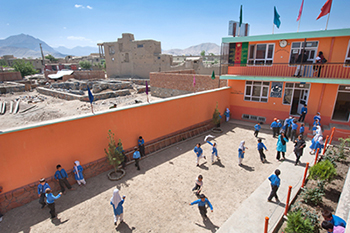
GUEST BLOG by SGT. SHERRILL on the CENTRAL ASIA INSTITUTE'S BLOG
In this season when we anticipate the birth of the Prince of Peace, this heartfelt poem by Sgt Sherrill expresses my own hope for the work that is going on in Afghanistan below the drones with the next generation - children so eager to learn and grow in whatever direction they are bent. What kind of education are they getting about the United States? Will the Central Asia Institute, Women for Afghan Women, other NGOs and the Sgt Sherrills of our military presence prevail or will the messages of the Taliban and our drones win the next generation? How will you participate in the outcome?
Behind the Wall
by Sgt. M. Douglas Sherrill, Jr.
I hear the voices behind the wall,
 ...
The Kitchen Sink: CONSUMERISM
From my friend N.J.R.
Regarding the way things work......
Once upon a time there was a SAINTED but unsung hero who invented the shower. Boy, it didn't take long for that one to catch on! Soon, everybody was taking a shower, and our world was much improved. Then, another guy came along who modified the shower head to make the spray adjustable......... Hmmmmmm....that really was an improvement and everybody got the new shower head.
Along comes another guy who gets the idea to sex the whole thing up by inventing a pulsing shower head. Then, this whole thing evolved into the hot tub by putting the pulsing shower heads under water into an enlarged bath tub. Wow, that was popular too...and muy sexy. Then the conservationists got on board and the "water-saver" nozzles were invented, and that was better yet.
Well, THAT is how capitalism works....... and that is what has made America such a hugely productive economic engine. THEN...
Parenting: THAT TONE OF VOICE
On one of the calls my son made from college, I was a bit late in picking up the phone and, unbeknownst to either of us, the upstairs answering machine recorded the whole conversation. We chatted amiably about this and that and then I remembered that I had sent him vehicle registration papers that he needed to fill out and return by a certain date. As I told him this news, he said, “There you go again with that tone of voice, Mom,” a frequent complaint. And I protested as usual, “What tone of voice?” “That 'gotta make sure my kid handles this' parent tone of voice that says you don't trust me.”
I had no idea what he was talking about. I thought I was just emphasizing something important. I did think of him as responsible and thought I was just giving him a reminder.
As I was getting into bed that night, I saw the message machine blinking so I pressed the play button. I smiled, happily reliving our conversation until the part about the vehicle registration when there it was – “that tone of voice.” It did indeed sound like I did not trust him to do the job.
Gitalongs: ANGST REFINED
He came in the front door with a cheery “Hello!” looking spiffy in his business suit. His kids, wife, and I responded in kind. He set his brief case on a chair in the hall and came into the kitchen. In the space of one minute, he crossed the kitchen to his wife at the stove, gave her a noisy kiss, raised the cover on a simmering pot (“Ummm that smells wonderful!”), crossed the kitchen again to kiss me, said “Stay for supper. Be back soon,” and went upstairs.
When he came down 20 minutes later, he was dressed in casuals. We called the kids to dinner and had random conversation with them about the kids’ day at school and my friend's and my work in our gardens. After dinner, the kids were excused to do their homework. My friend said, “Abby and I were talking about all of us taking a trip to the Eastern Shore tomorrow.”
Oh, I'm sorry,” came his response, “but we have other commitments.”
“We do?” she asked, puzzled.
Bread Crumbs: GRIEVING THE LIVING
Christmas, a season that emphasizes family gatherings, may be especially difficult for those who are grieving the living.
My friend, a spiritually grounded apostate, got a letter from her born-again daughter disowning their relationship and forbidding my friend any contact with her or her family of two beloved teenaged grandchildren and her son-in-law.
Another friend lost her son to drugs and yet another grieves loss of contact with highly successful children who have moved far away, make no effort to stay in touch, and chat only briefly when she calls them.
A couple I’ve known since we started raising our kids together nurtures their two adult sons who are marginally making it because of mental health issues.
I myself grieved the end of a marriage – the triple loss of a parenting partner, a once friendly and intimate relationship, and a social role. As in my first friend’s case, divorcees too may lose beloved family members and friends - people who “don’t want to take sides” or don’t know how to handle a “third wheel” in their social scene.
Monday, December 12, 2011
Wordage: PLACE GAME
This delightful wordage pastime was posted by qcghost.blogspot.com as Where I Have and Have Not Been
I have been in many places, but I've never been in Cahoots.
Apparently, you can't go alone. You have to be in Cahoots with someone.
I've also never been in Cognito. I hear no one recognizes you there.
I have, however, been in Sane. They don't have an airport; you have to be driven there.
I have made several trips there, thanks to my friends, family and work.
I would like to go to Conclusions, but you have to jump, and I'm not too much on physical activity anymore.
Sunday, December 11, 2011
Politics: CLEVER HALLELUJAH CHORUSES
Every Christmas season Handel rolls over in his grave at the various revised renditions of his magnificent oratorio. The first one should make him grin, the second will make him spin!
From the Children and Townspeople of Quinhagak, Alaska
***************************************************************************************************************
Hallelujah Corporations! An Excellent Rendition of the Hallelujah Chorus--
http://www.youtube.com/watch?v=ws0WSNRpy3g
From the Children and Townspeople of Quinhagak, Alaska
***************************************************************************************************************
Hallelujah Corporations! An Excellent Rendition of the Hallelujah Chorus--
http://www.youtube.com/watch?v=ws0WSNRpy3g
Thursday, December 8, 2011
The Kitchen Sink: THE MOST POWERFUL AMERICAN POET
What do you think is the most powerful, most influential poem ever written in this country? Which one has changed our American culture, our economy, our relationships, influences our state of mind and behavior whether we know it, like it, or not, and continues to impact our children's lives more than we may want to acknowledge?
Wednesday, December 7, 2011
Gitalongs: SELFISH ALTRUISM
When my father informed me that altruism was actually selfish, I was horrified! He maintained that the only reason we do nice things for others is out of duty or to make ourselves feel good. It took me years to admit that, indeed, when I am intuitively and spontaneously pleasant and generous it’s because I like being that way. It makes me feel better to be that way. It makes me happy to see other people happy. My life is easier, more pleasant.
Is this realism or cynicism? I reluctantly concede that perhaps Dad had a point. Maybe the closest we can come to the total altruism of giving up our life for another - as on a cross or the Titanic, or in military combat - is Enlightened Self-Interest? Are we only doing good to do well?
Is this realism or cynicism? I reluctantly concede that perhaps Dad had a point. Maybe the closest we can come to the total altruism of giving up our life for another - as on a cross or the Titanic, or in military combat - is Enlightened Self-Interest? Are we only doing good to do well?
Subscribe to:
Posts (Atom)